Home Blog Projects Resume Contact
Thesis Project

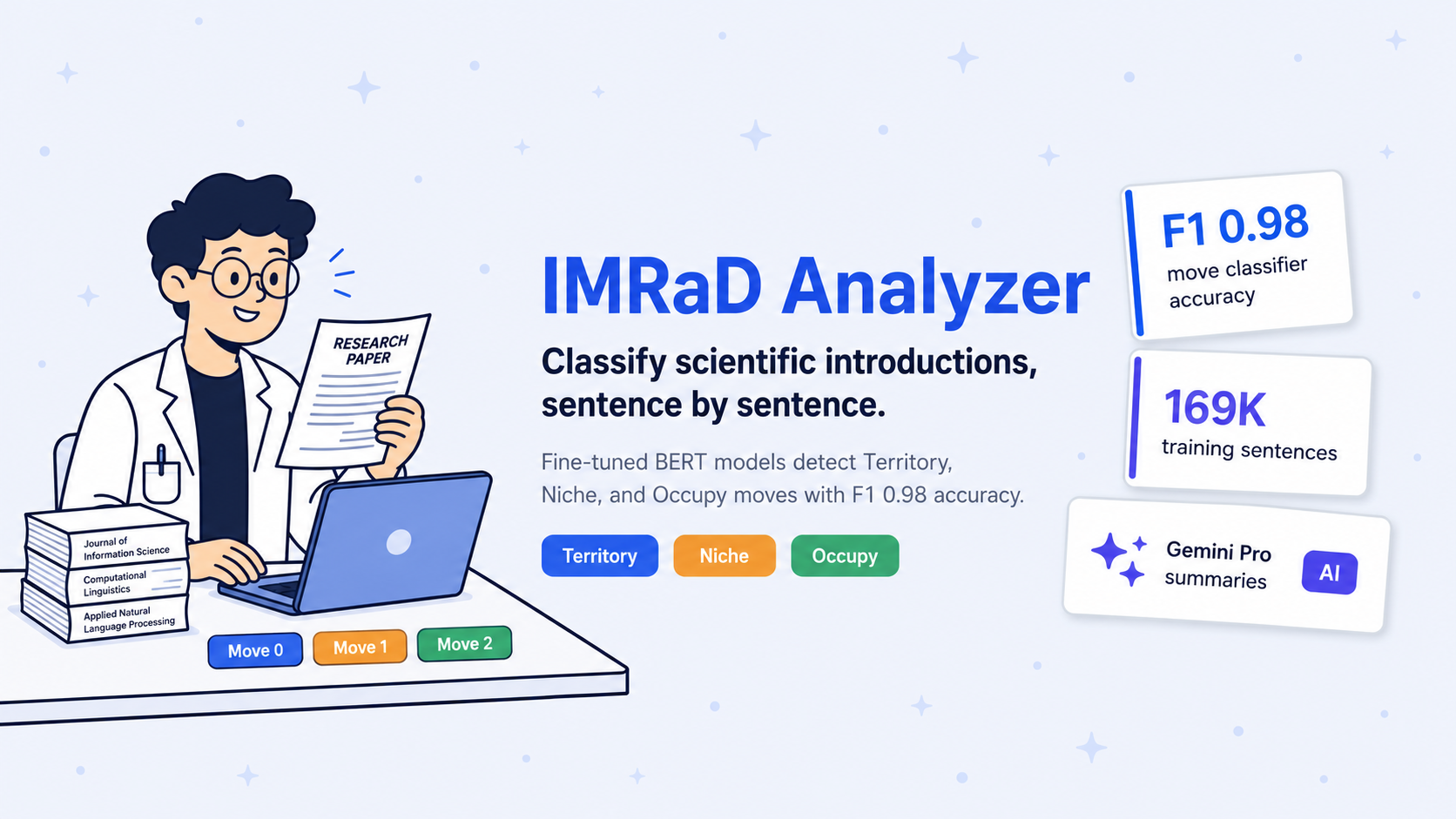
IMRaD Analyzer: Distributed Microservices for Scientific Text Classification

An 8-node microservices platform leveraging BERT and Gemini Pro to classify scientific papers, using a custom 169k-sentence dataset to achieve a 98.21% peak F1-score.

Stack
Next.jsFastAPIBERTGemini ProTF Serving
IMRaD Analyzer promotional thumbnail
01

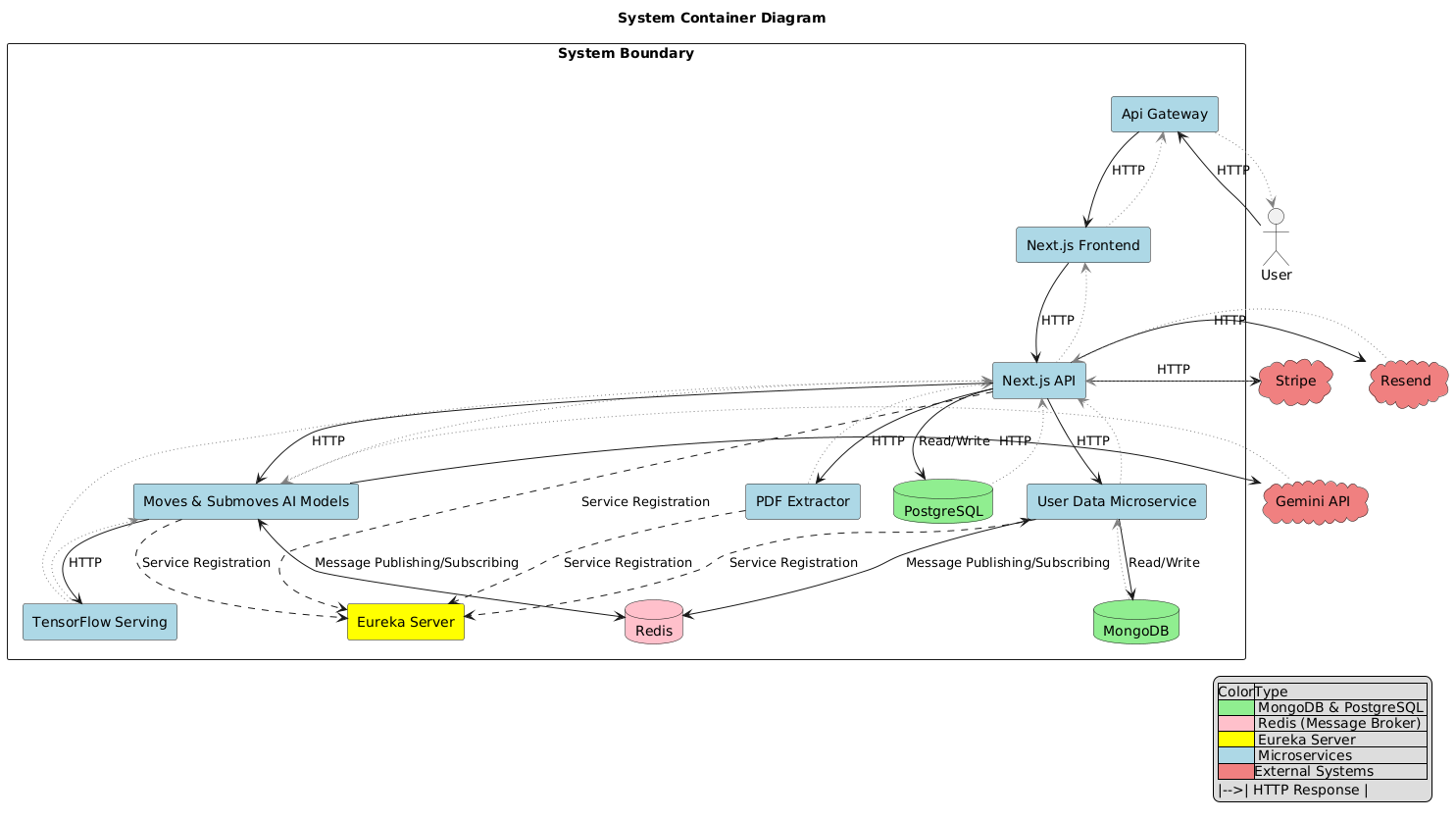
8-node Microservice Architecture.

  • Nginx (gateway)
  • Spring Cloud Eureka (discovery)
  • Next.js (frontend and API)
  • PDF extractor (FastAPI)
  • Tensorflow Serving
  • Moves and Sub-moves AI microservices (FastAPI with langchain)
  • User data microservice (MongoDB, Express.js)
  • Redis as a message broker.
8-node Microservice Architecture.
02

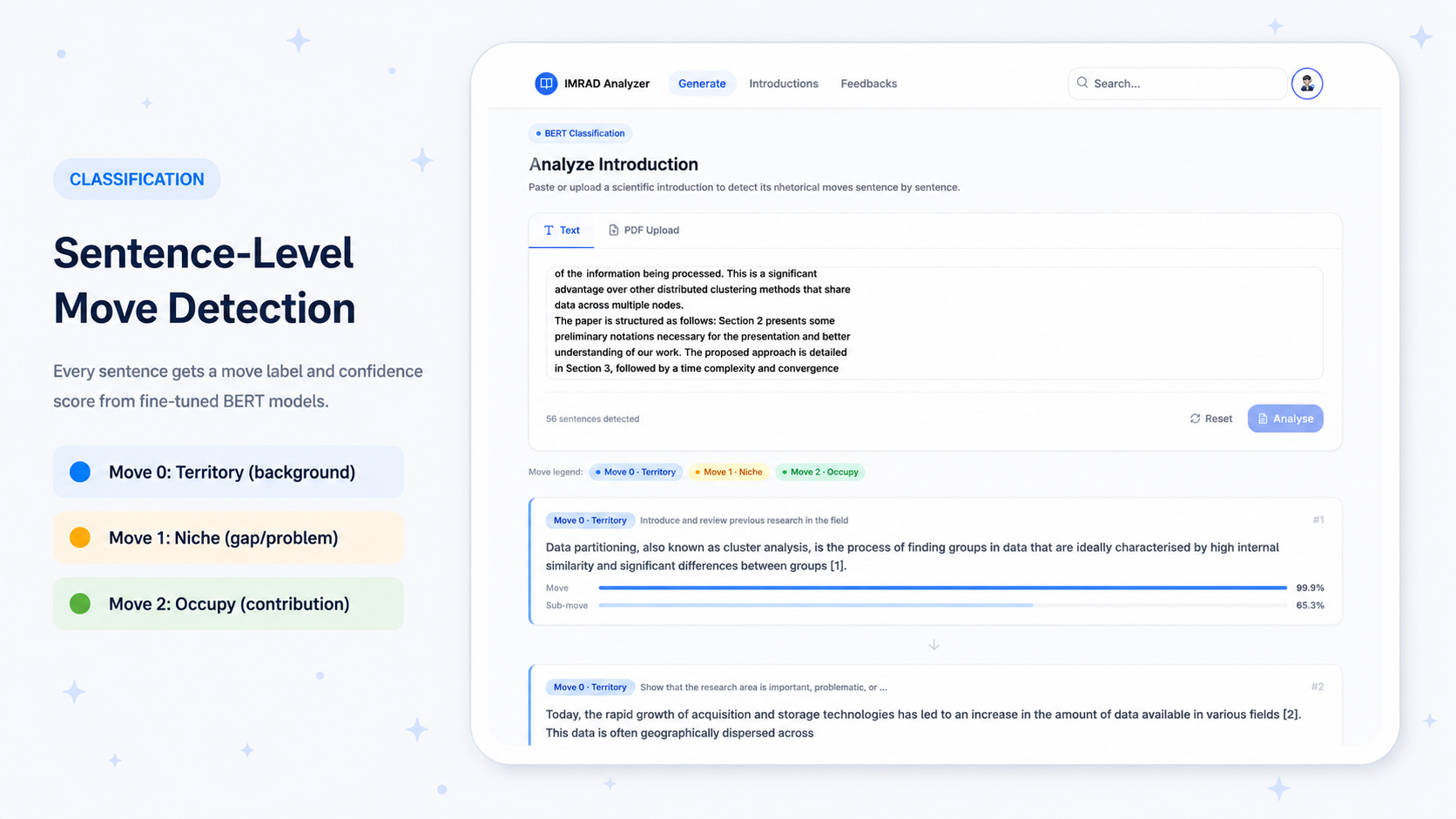
Sentence-Level Move Detection

  • Every sentence in a scientific introduction is labeled with its IMRaD move (Territory / Niche / Occupy) and sub-move in real time.
  • Color-coded badges (blue, amber, green) and per-sentence confidence bars make classification results immediately readable.
  • A cascade of four hierarchical fine-tuned BERT models drives the full pipeline, served via TensorFlow Serving.
Sentence-Level Move Detection
03

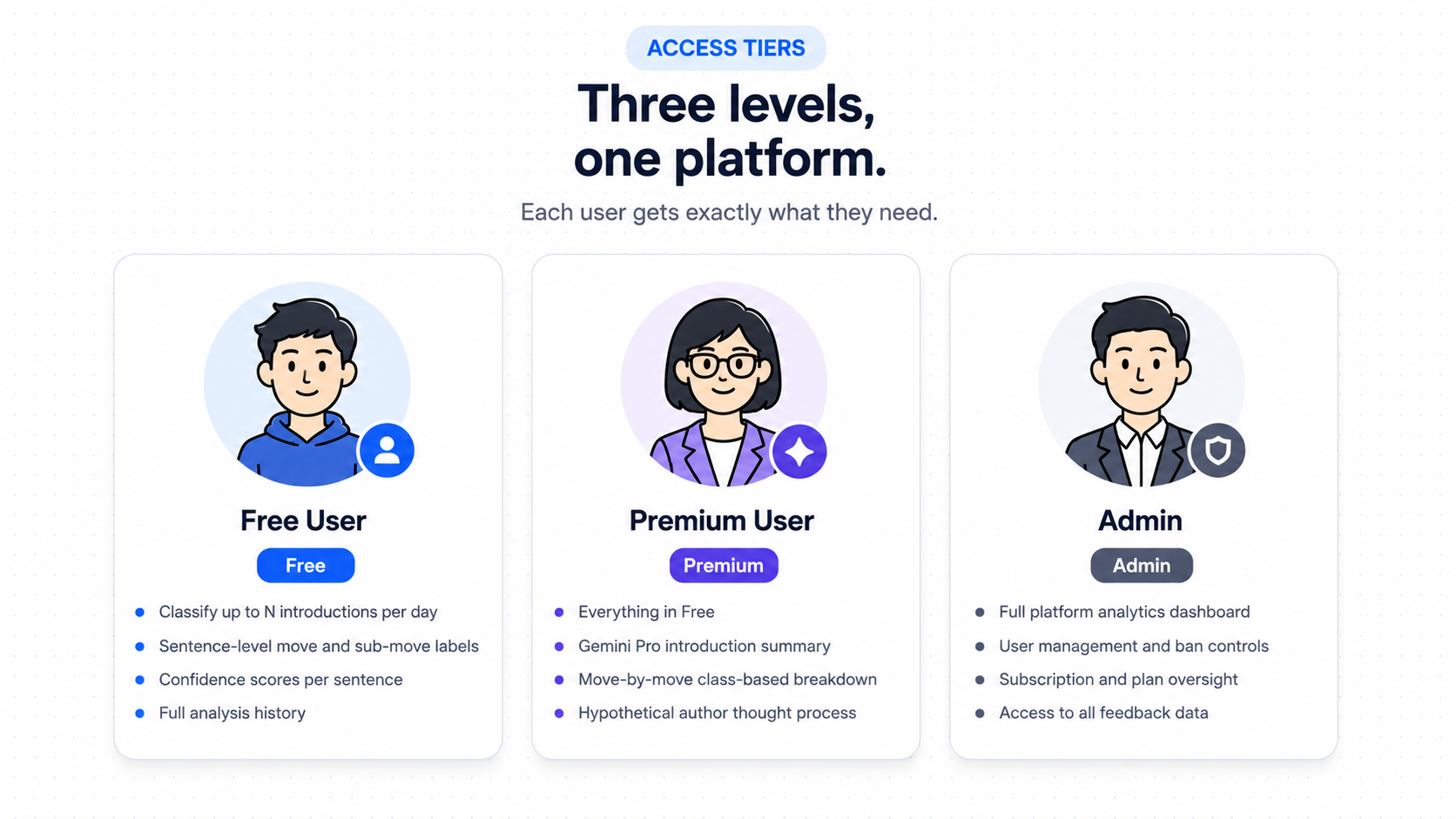
Three-Tier Access Model

  • Free users classify introductions, view sentence-level labels and confidence scores, and access their full analysis history.
  • Premium users unlock Gemini Pro summary, class-based move breakdown, and hypothetical author thought process.
  • Admins get platform-wide analytics, user management, subscription oversight, and full access to all feedback data.
Three-Tier Access Model
04

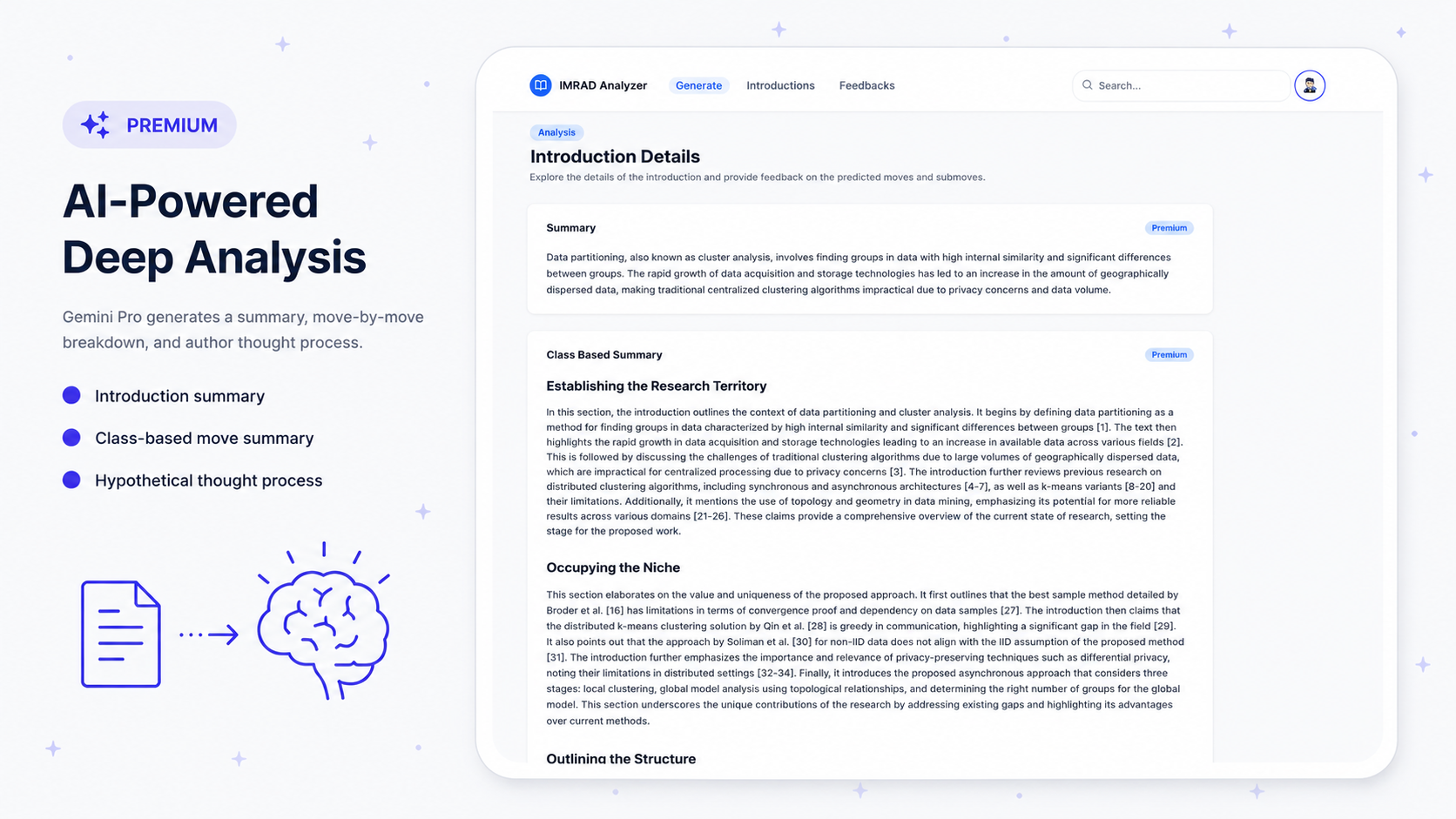
AI-Powered Deep Analysis

  • Premium users receive a Gemini Pro-generated introduction summary, move-by-move class-based breakdown, and hypothetical author thought process.
  • All three sections stream asynchronously via Redis pub/sub so results appear progressively without blocking.
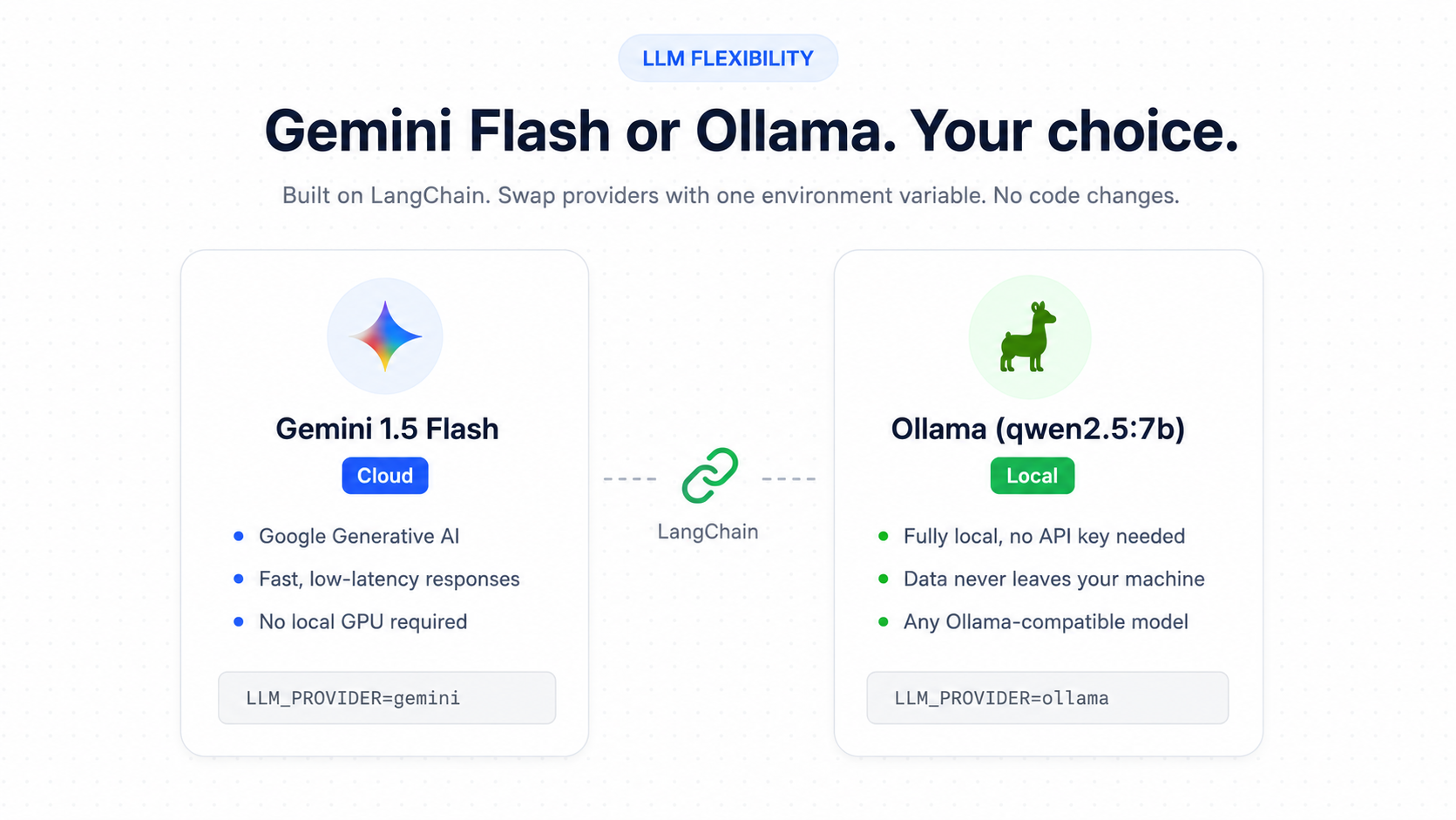
  • Built on LangChain, the AI layer can switch between Gemini Flash and a fully local Ollama model with one environment variable.
AI-Powered Deep Analysis
05

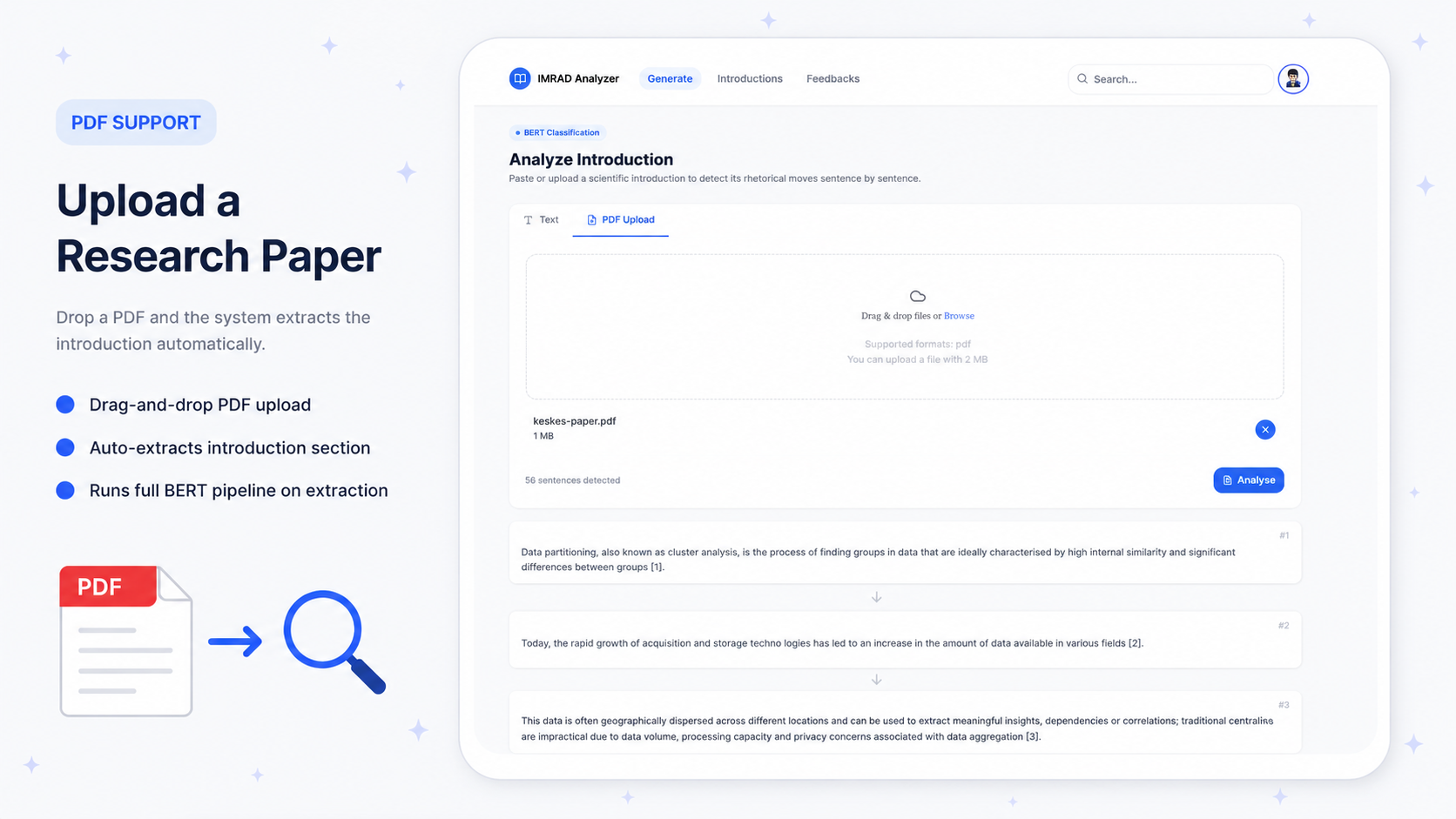
PDF Upload and Extraction

  • Users drag and drop a research paper PDF and the system automatically extracts the introduction section.
  • A dedicated FastAPI microservice handles extraction, then hands the text to the BERT classification pipeline.
  • The full sentence-level classification runs on the extracted introduction with no manual copy-paste required.
PDF Upload and Extraction
06

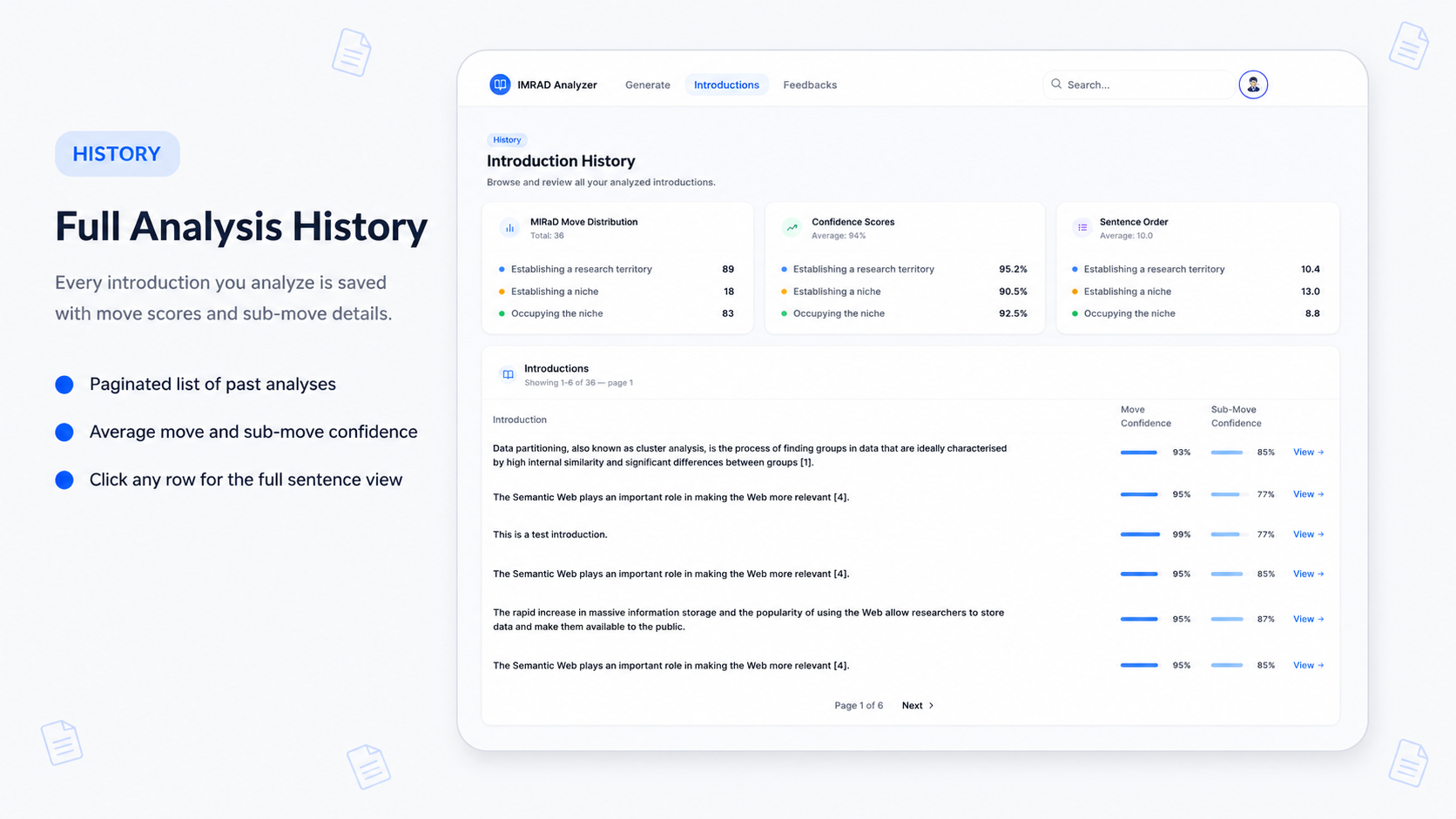
Full Analysis History

  • Every analyzed introduction is saved with average move and sub-move confidence scores and a creation timestamp.
  • Paginated list links directly to the full sentence-level breakdown for any past analysis.
  • Lets users track how different papers score across Territory, Niche, and Occupy moves over time.
Full Analysis History
07

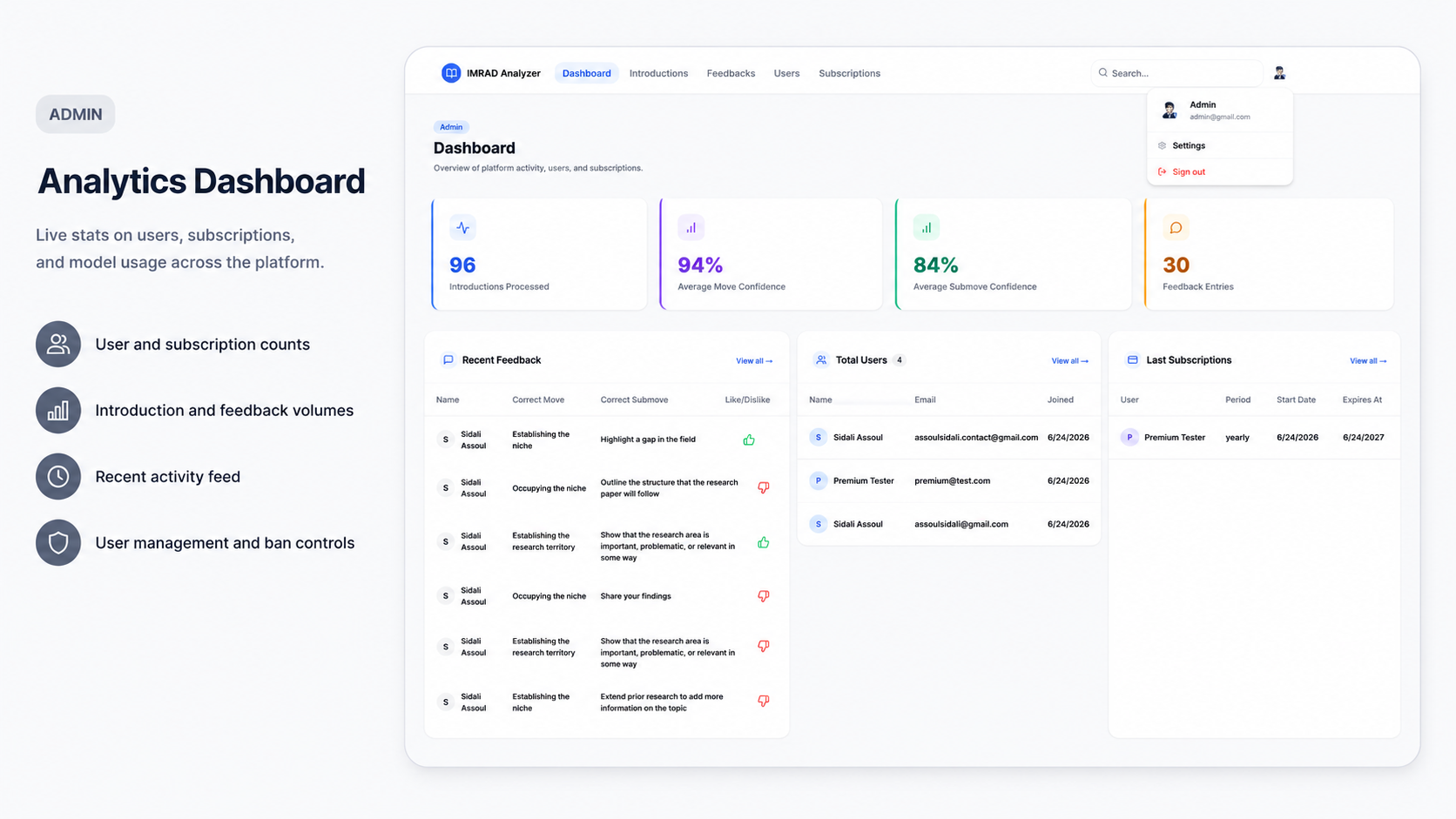
Analytics Dashboard

  • Live stat cards show total users, premium subscribers, introductions analyzed, and feedbacks collected across the platform.
  • Charts and a recent activity feed give admins a real-time view of platform usage without leaving the dashboard.
  • User management and ban controls are accessible from the same page.
Analytics Dashboard
08

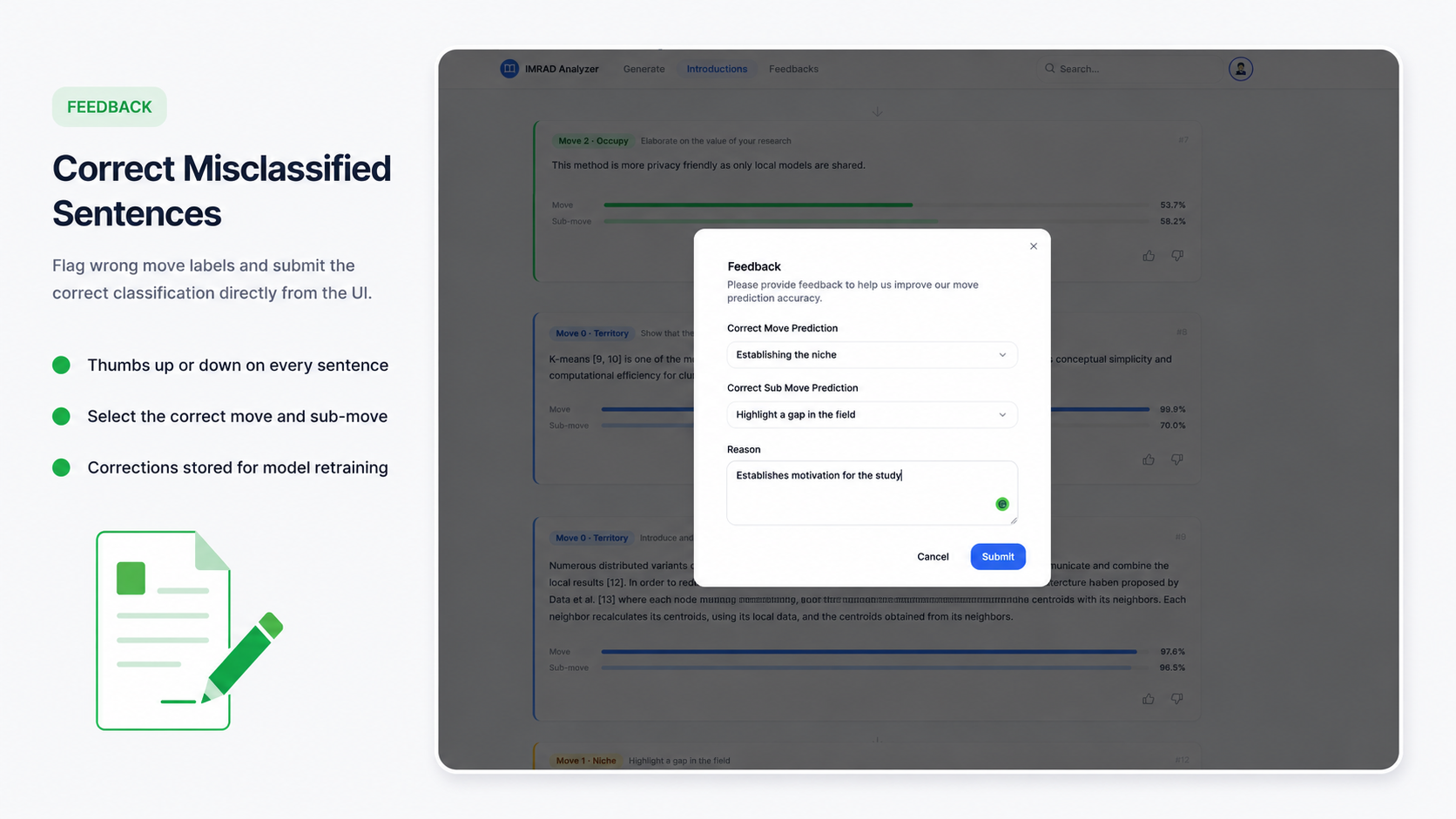
Correct Misclassified Sentences

  • Users flag any sentence classification as wrong directly from the introduction detail page using thumbs-up/down controls.
  • A correction dialog lets users select the correct move and sub-move before submitting.
  • Every correction is stored and fed back into the BERT retraining pipeline to close the model quality loop.
Correct Misclassified Sentences
09

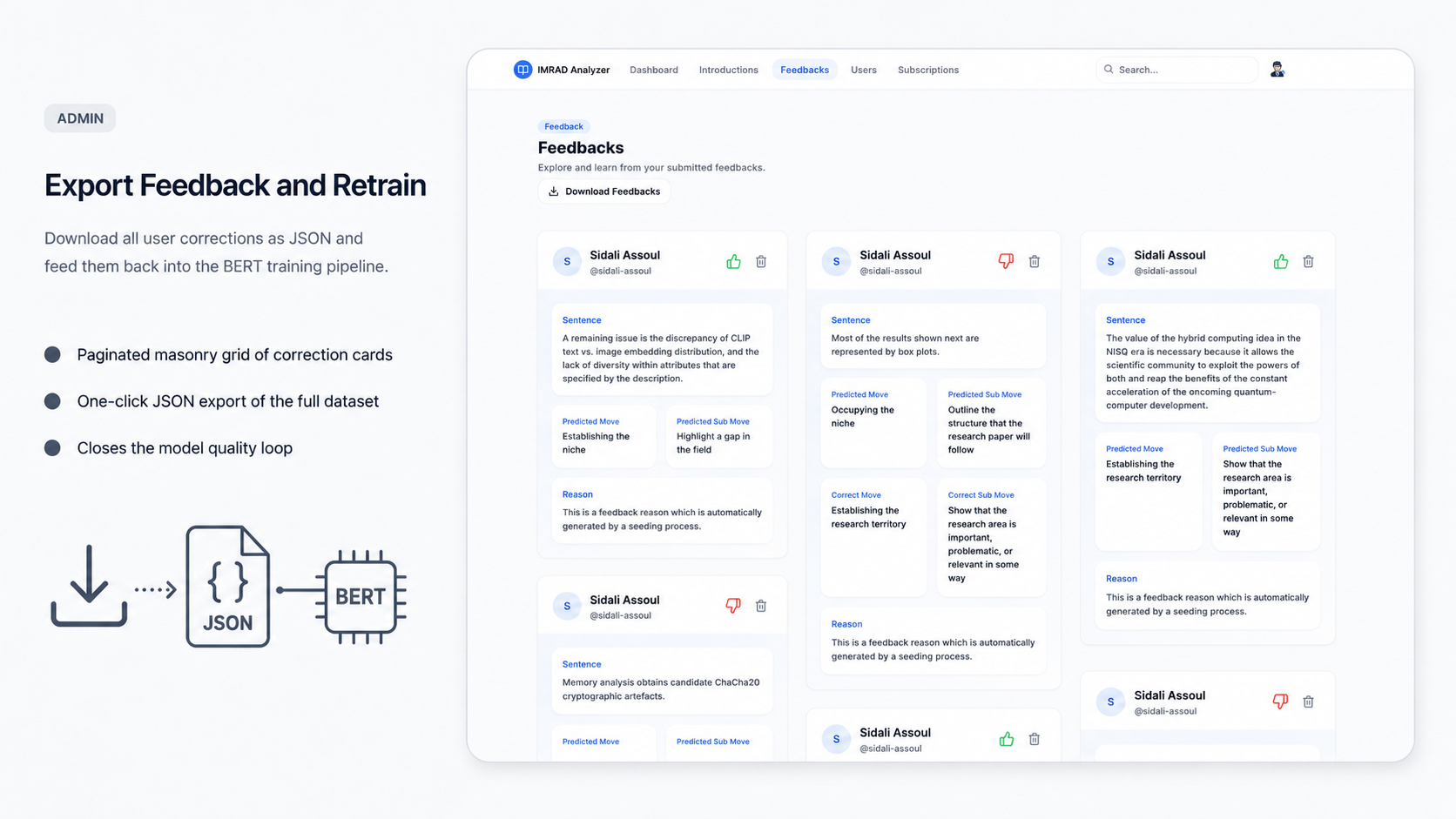
Export Feedback and Retrain

  • Admins browse all user-submitted corrections in a paginated masonry grid of correction cards.
  • One-click JSON export downloads the full correction dataset for use in the BERT training pipeline.
  • Closes the model quality loop by routing real misclassification data back into fine-tuning.
Export Feedback and Retrain
010

Flexible LLM Backend via LangChain

  • The AI analysis layer is built on LangChain and ships with two providers switchable via one environment variable.
  • Set LLM_PROVIDER=gemini to use Gemini 1.5 Flash via the Google API, or LLM_PROVIDER=ollama for fully local inference.
  • No code changes required to swap providers; any Ollama-compatible model works out of the box.
Flexible LLM Backend via LangChain